Bronnie Ware worked as a palliative nurse in Australia in a hospice and wrote the book Top Five Regrets of Dying. In it she shares 5 things people regretted most on their deathbed. About 15-20% of the population is a highly sensitive person and recognises themselves in these HSP traits (so about 1 in 5 people Bronnie helped).
Below you will find these things for inspiration, I have freely translated them and supplemented them with insights for HSP.
Regret 1. “I wish I’d had the courage to live a life true to myself, not the life others expected of me.”
This is the most common. Which wishes have not been fulfilled because of choices you made or did not make? HSP have a more sensitive nervous system. They are extra open to energy, also to other people’s energy. If high sensitivity is not yet well mastered, they can become absorbed in other people’s expectations, wishes and demands. They can steer someone else’s course, rather than their own.
Tips:
Learn to master your high sensitivity and use it as a strength. So that you can steer your own course.
Learn to set your boundaries.
Are you (partly) healthy? Be thankful for your health and use what you can (still) do. It gives (unconscious) freedom.
Become aware of what you really want in your life. What are your dreams and wishes? Shape this.
Regret 2. “I wish I hadn’t worked so hard”
Maybe as a HSP you get caught up in the rat race because you think this is the way it should be? Do you lose yourself in perfectionism at work? Does this make you miss important moments and time in your private life, such as birthdays or your child’s first steps?
Tip : do work in which you feel comfortable.
Regret 3. “I wish I had the courage to express my feelings”
Sometimes HSP swallow their feelings and thoughts, because they are afraid that someone else will be affected or that a fight will arise. This can cause you to experience negative emotions such as bitterness or hatred.
Tip : Learn to express yourself!
Regret 4. “I wish I had stayed in touch with my friends”
Many highly sensitive people are so caught up in stimuli that they cannot maintain friendships properly. Bronnie noticed that people who died regretted friendships they didn’t give them the time and attention they actually wanted to give it.
Do you understand dutch? Check out these tips that I wrote for Happinez to get the most out of friendships as a HSP.
Regret 5. “I wish that I had let myself be happier”
Many highly sensitive people hold themselves back. They fear change and cling to old habits that don’t help them move forward. You may pretend to yourself or others that you are happy and your life is perfect, but you feel deep down that this is not really the case.
Tip dare to choose your happiness! What do you want to have done before you die? Take action <3.
This video covers the 5 things:
I collaborate with bol.com. This article therefore contains affiliate links. If you order the mentioned book by Bronnie/something else at bol.com via the links in this article, I will receive a small compensation for this and you will support me. I appreciate this very much! You don’t pay anything extra.
Did you get anything out of this article? You are doing us a big favor with a donation :). By doing so, you will support us to share even more informative and inspiring articles in the future. Any amount (small or large) is very welcome.
You can donate via your creditcard or PayPal-account through this link using PayPal. Our PayPal account is in the name of Femke de Grijs Training & Coaching.
We are Femke and Mathijs: a Dutch couple and we are both highly sensitive and highly intuitive/paranormal. We feel a non-physical presence beyond the visible site and we are very interested in spirituality and sacred places.
We love to travel the world with our dog Juultje (born in 2022).
We like helping highly sensitive and paranormal persons to discover their divine calling and soul purpose and live it, so they can feel alive too.
There are many stimuli in the world, just think of sound. How do you deal with this? Do incentives work to your advantage or disadvantage and:
Are you bothered by noise?
Do you suffer from crowds and do you feel rushed?
Do you feel that you have to meet all kinds of expectations/prove yourself?
Do you have a full head and do you worry, which makes you less solution-oriented?
Do you have a short attention span, are you easily distracted and having concentration problems?
Sound and silence in your outside and inside world affects this. In this blog you will discover more about this and also how you can make silence work to your advantage.
Silence/noise pollution in the outside world
The environment in which you live/work has a (subconscious) influence on your well-being. What kind of environment do you live and work in:
In an environment that is acoustically quiet and where you hear nothing/very little?
In an environment where you hear a little noise (such as wind rustling/bird chirping)?
In a noisy environment (such as near an airport, train station, sawmill, construction, loud neighbors or discotheque)?
How does this affect your body, feelings and thoughts? For example, noise nuisance can lead to (chronic) stress, hearing problems (such as tinnitus), cardiovascular problems (such as high blood pressure and heart rate) , a lowered immune system and fatigue. The WHO wrote a report on noise pollution in relation to the loss of healthy life years.
It can also cause other problems such as feeling restless and having a busy head.
Noise in your inner world
In Western society people are taught to be focused on the outside world and to have a fast pace of life. Are you pursuing things, are you busy performing?
Some people lose themselves in the outside world and rat race. Inwardly there is no stilness, but noise. This can cause complaints. Are you going beyond your limits ? Do you feel stressed , overwhelmed, scared , lonely and/or are you overworked and burned out?
Why do you need silence?
Stillness helps you on a physical, emotional, mental, relational and spiritual level.
Silence advantages and disadvantages
What quietness exactly does to you is personal. Below you will find 20 examples of physical, emotional, mental, spiritual and relational advantages and disadvantages of stillness.
What is the power of silence? About the benefits of silence:
Physical benefits of silence:
Here are some examples of the physical benefits of stillness:
1. Recharge yourself
About 1 in 5 people is a highly sensitive person (HSP) and recognizes themselves in these HSP traits. Stimuli enter HSP more intensely compared to non-HSP. Relaxing is important; in this way, incoming stimuli are processed and the energy system is restored. Stillness contributes to this and helps you to recharge yourself on a physical, emotional, mental, relational and spiritual level.
2. Lower your blood pressure
A study found that adding 2 minutes of silence after listening to music significantly reduced subjects’ heart rate and blood pressure (important measures of heart health). Compared to relaxing and slow music, silence caused a greater drop in heart rate and blood pressure.
3. Sleep better
Research shows that noise can lead to problems such as poorer sleep in the hospital.
If there is literal noise and/or noise in your head, this can (unconsciously) keep you awake. Experiencing external/inner stillness contributes to better sleep.
Emotional benefits of silence:
Below are examples of emotional benefits of stillness:
4. Create emotional balance
Stilness has several positive emotional effects. It supports you to let yourself be less carried away by emotions and to feel confident, safe and powerful.
5. Be more relaxed
Stilness supports you to calm down and relax so that you feel calmer and more peaceful. It helps you deal with stress better.
6. Enjoy more
Silence helps you to let everything come through to you optimally, so that you can enjoy it to the fullest.
7. Accept better
Stilness supports you to accept and surrender to what is (and not try to ‘know’/control everything).
Mental benefits of silence:
Below are examples of mental benefits of stillness:
8. Reflect optimally
Stilness helps you to turn inward and contemplate / reflect.
9. Get insights
Stilness helps you to gain insights, new ideas and to be creative. It helps you find solutions to problems.
10. Having space for creation
In silence you can experience space, so that you can create something from ‘nothing’.
11. Put things better into perspective better
Stilness helps you step by step to break through a continuous stream of thoughts. It helps you to distinguish thoughts, so that you have a clear idea of what is (un)important to you. Silence supports you to see what is going on in yourself and the world. It helps you to put things into perspective. It supports you to set realistic/achievable goals.
12. Perceive more beauty
Stilness supports you to perceive more beauty in yourself and the world around you.
13. Increase your focus
Silence helps you to experience more space between your thoughts and focus. It supports you to be less carried away by thoughts/worrying, if you know how.
14. Improve your memory
One study found that 2 hours of silence stimulated the growth of new cells in the region of the brain related to memory.
15. Be more efficient and productive
Because your mind is clearer, you can prioritize better and be more efficient and productive in your work and personal life. You can get more done in less time.
Spiritual Benefits of Silence:
Below are some examples of spiritual benefits of stillness:
16. Expand your consciousness
Silence helps you to increase your (self)awareness and to perceive more space.
17. Understand who you are
Silence helps you to get in touch with Yourself and to get to know Yourself better. It helps you to feel at Home in Yourself (your own energy).
18. Strengthen your intuition
Silence helps you to be in better contact with your intuition and to strengthen it. This helps you, for example, to make choices that really suit you.
19. Be supported by the energy of Being
Silence supports you to Be and to perceive what is.
20. Make use of the relational benefits of silence:
If you can really be still, you can hear and listen to what is happening in your inner and outer world. This helps you to be in better contact with Yourself, which allows you to improve the relationship with Yourself.
It also helps you to be in better contact with the gross and subtle world around you. You then feel connected to everything/a greater whole (including the spiritual world as with light beings and Ascended Masters). This helps you to improve the relationship with the external world(s).
Disadvantages of silence
In principle, there are no disadvantages associated with silence. However, at first it may seem that silence has disadvantages.
Emotional Disadvantages of Silence
Literally 100% acoustic silence in your physical world can trigger emotions with charge/uncomfortable feelings. You may feel frightened/disturbed by a deathly silence.
Spiritual Disadvantages of Silence
Many people are not in touch with themselves. It can be confrontational to get in touch with yourself and discover what is going on there on a physical, emotional, mental, relational and spiritual level.
What was playing in the background can quietly come to the surface. This can be daunting at first. You may become aware of tension in your body, stress and troubled thoughts. Paradoxically enough, silence can then seem to be ineffective and rather counter-productive. It can be extremely valuable if you dare to be open to this and don’t shy away from confronting yourself; this way you can learn to transform this (in the long run).
What helps you to experience more stillness? 5 tips
The tips below will help you experience more silence:
Tip 1. Consider what silence means to you
What does stillness do to you? What do you (dis)like about it?
Many people find silence in the outside and their inner world exciting/scary and avoid silence and fill up on silence, for example by:
constantly looking at a screen such as a smartphone and by being busy with social media/watching TV.
always having the radio on.
talking for the sake of talking (and to find silence uncomfortable).
Gain insight into which blockages (unconsciously) prevent you from allowing more (inner/external) silence.
Tip 2. Consciously think about yourself
To what extent do you experience a balance on a physical, emotional, mental, relational and spiritual level? Be honest with yourself. Do you feel deep down that something needs to change? What could silence mean to you?
Tip 3. Schedule time
Silence in your inner and outer world does not automatically come into your life. Do you want to experience this more? Consciously plan time for this. Pay attention to this. The more attention you pay to this, the more results you will achieve.
Tip 4. Create physical silence that suits you
For example, what do you like in terms of (no) sounds around you?
Usually, nature sounds (such as the sound of the sea or birds) are experienced as more pleasant than traffic sounds. This is related to evolution.
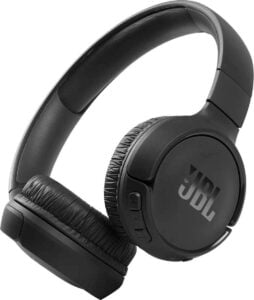
Silence headphones
Some HSPs like to wear silent headphones when there is external noise, such as on an airplane .
Tip 5. Create inner silence in a way that suits you
Sometimes it is not possible to create literal silence around you. It is a great misunderstanding that you have to stop acoustic sounds, feelings, emotions and thoughts before you can experience inner silence.
Silence is not fundamentally about the absence of (acoustic) sound; it involves consciousness and an inner state of stillness /awareness. You can also experience this if you have noise (and many decibels) around you or if you are deaf and have inner feelings and thoughts and perform activities (such as Yin Yoga). The trick is to make this inner silence your own; this has a lot to offer you and the world around you!
Which vision suits you?
Dare to ask for help if you want to create more inner stillness. Choose a way that resonates with you. What kind of vision do you have? If you have a scientific, religious, holistic / spiritual point of view, choose an approach that aligns with this.
Below you will find a few examples of how you can create more inner silence.
Silent meditation
For example, meditation can help to experience more inner silence, even in the face of external noise. If you have never meditated before, a guided meditation can be helpful to experience more stillness. Tip: Mathijs van der Beek gives a free (guided) dutch meditation every Sunday at 20:00 dutch time via his live stream. Are you having interest in an English version? Let us know!
If you have meditated more often, it is usually easier to meditate in complete silence and benefit from this.
Silent retreat
Some people think that taking a one-time silent retreat (for example by being alone in a monastery for a weekend) is a one-time ‘miracle pill’ that brings about complete inner silence for the rest of their lives. This is a misunderstanding. Experiencing more inner silence is a process that requires time and attention.
Silence treatment
For example, some professionals offer a silent treatment that supports you to experience more inner silence. I usually do this too :).
Did you get anything out of this article? You are doing us a big favor with a donation :). By doing so, you will support us to share even more informative and inspiring articles in the future. Any amount (small or large) is very welcome.
You can donate via your creditcard or PayPal-account through this link using PayPal. Our PayPal account is in the name of Femke de Grijs Training & Coaching.
We are Femke and Mathijs: a Dutch couple and we are both highly sensitive and highly intuitive/paranormal. We feel a non-physical presence beyond the visible site and we are very interested in spirituality and sacred places.
We love to travel the world with our dog Juultje (born in 2022).
We like helping highly sensitive and paranormal persons to discover their divine calling and soul purpose and live it, so they can feel alive too.
There are several types of highly sensitive persons (HSP). HSP types are various manifestations or different forms of high sensitivity. Are you highly sensitive and curious which type you are; a HSS (high sensation seeker) / thrill seeker or tranquility seeker ? Discover in this blog what it exactly means, how to test it and what it can do for you!
High sensitivity and balance
Approximately 15-20% of the population is a highly sensitive person (HSP) and recognizes themselves in these highly sensitive person traits. If you are a HSP, stimuli can come in intensely and your nervous system can become overstimulated. This can make you suffer from fatigue, among other things.
HSP often find it difficult to find a balance between making time for themselves (and their inner world) and the outside world; this can cost energy. You can learn how to best organize your time and be productive!
Why do HSPs handle their sensitivity differently?
HSP deal with their high sensitivity in a diverse way. This is related to their personality. A personality includes the physical, emotional and mental aspect of someone. Your personality is partly formed by an innate part (your genes and nervous system) and what you have learned.
Two types of highly sensitive persons
Basically you can distinguish two types of highly sensitive personalities, in random order:
Thrill/sensation seekers , approximately 25 % of the HSP falls under this. These are also called High Sensation Seekers, abbreviated to HSP HSS type.
Tranquility/Rest seekers, approximately 75% of the HSP falls under this. Some people call this type HSP: that is a misunderstanding. A HSP can also be the HSS type mentioned above.
You can often recognize something in yourself of both types. One type often has the upper hand. See below some qualities and pitfalls of both types, these can vary per person!
Type 1: HSP HSS type
HSP HSS Types are also referred to as Thrill or Sensation Seekers. Sensation Seeking means that you consciously seek out sensations, stimuli or impressions . You can be strong willed.
Compared to a thrill seeker of average sensitivity, a HSP of this type tends to be more aware of details and interested in them.
Compared to a Tranquility Seeker type, you are a bit more extroverted, more focused on the outside world and look for new and intense experiences. You like excitement and adventure and are willing to take a lot of risk (financially, socially, physically and legally). In general, this type makes itself heard more than the Tranquility Seeker. You love contact with people, but this can also exhaust you if you have not yet mastered your high sensitivity.
A problem that this type can experience is that you are often overstimulated, but you also quickly get tired of things. You can bustle with ideas and get a full head. You regularly need a challenge and incentives (because otherwise you will find life boring), but also peace and sometimes seclusion. This can sometimes be confusing for yourself or others.
Type 2: HSP tranquility seeker type
Compared to a Tranquility Seeker with an average sensitivity, this type of HSP is often more aware of themselves and others. This HSP is calm and contemplative, likes an orderly and regular life and acts less impulsively than a Sensation Seeker. He/she does not like risks of crowds.
Maybe you sometimes prefer to avoid social events and prefer a 1 on 1 conversation? This image fits more with the HSP stereotype. These HSPs are often found introverted. It is usually thought that introverts close themselves off from worldly matters, but HSP are busy with this a lot!
A problem that this type may experience is that you can become overwhelmed with feelings and worries, withdraw and may feel lonely at times , or suffer from shyness.
Tips for highly sensitive persons:
What do you recognize from both types and which type has the upper hand? Get insight into what kind of HSP type you are. For example, take a HSP type test (Femke shares this test in her guidance).
Use the qualities and do activities that belong to your type. So that you get energy from your HSP type, instead of being bothered by it.
Learn to manage and master your high sensitivity so that it works to your advantage (instead of disadvantage). Especially if you are an HSS type, learning to limit is important.
What kind of type of HSP are you?/HSP HSS Test
Not sure if you are a HSP, or what type of HSP you are? Or have you just discovered that you are highly sensitive and do you have an idea what kind of HSP type you are, but do you not know what you can do with this concretely and how you can reap the benefits of this? You are welcome to contact us.
An old soul is a soul with a relatively large consciousness . Often such a soul has often been on earth and such a soul has gained a lot of life experience .
A young or new soul often means a soul that has been on earth little and has gained little life experience. Such a soul can have a somewhat more limited or more ‘narrowed’ consciousness compared to an older soul.
In practice, there are many misunderstandings about what an old soul exactly is. Old and new are relative ‘earthly’ concepts and can only be compared in each other’s context. Consciousness can be developed in many ways. For example, in some cases a soul may have developed its consciousness, by incarnating a lot on other planets and/or other galaxies and cosmoses and thus gaining experience, and incarnating little on earth. Such a soul can be called an old soul.
Old soul in child
Furthermore, it is a misunderstanding that the age of a soul is always linked to the age of a physical body. Someone with a body of 3 years can have an older soul compared to someone with a body of 83 years. This is sometimes also described as an old soul in the body of a baby or child. Often babies and children with an old soul are called New Age Child .
Recognize old soul
There are various characteristics by which you can recognize an old soul, these are also called old soul characteristics. Old souls can:
Have an interest in psychic qualities and be psychic .
Like depth (also in terms of relationships) and spirituality . For example, you like to gain knowledge in that area.
Not so much value matter, but value more spiritual things like the soul. You may feel no age, or older than your age. Perhaps you had wise sayings as a child.
Want to live from inspiration and love (instead of fear: they are often not afraid of death ). You oversee a ‘bigger picture’ and feel that everything is connected.
Engage in personal development and consciousness development.
Have memories of past lives; you may be drawn to specific times or countries.
Love helping or advising others and listening to others; others often know where to find them in that area. If an old soul is not in balance, they can become ‘drained’ by others.
Be idealistic.
Feel connected to nature.
Feel like they come from other dimensions. Maybe Earth doesn’t feel like your “home”; when an old soul is out of balance, it can feel homesick for the dimensions it came from.
Feel like they are not their body.
Like to be alone and/or do things alone.An old soul can also feel lonely or an ‘odd person’ if it is not balanced .
Hold honesty in high esteem. They can happen instantly.
Old soul test
There is no scientifically proven test to find out whether you have an old soul or a young soul. You can feel this yourself, for example on the basis of the above characteristics. This requires strong intuition and being honest with yourself. People are sometimes wrongly labeled as ‘ young ‘ by others.
Some highly sensitive people can also recognize an old soul by someone’s eyes . These eyes seem to penetrate you or look ‘right through you’.
Do you want to know more?
In our help we teach you how to balance your old soul. Please contact us about this.
If you are thinking about vaccination against COVID, it is good to make an informed choice. In this blog I will inform you about the choices and you will discover how you can support yourself energetically.
Choice 1 – healthy living
There are several studies that show that structural vitamin D use has a very positive influence on the course of COVID. The number of deaths would be drastically less. There are more options for strengthening your immune system, such as sufficient exercise, vitamin C, zinc, L-Lysine and other good nutrition. The chance of dying from COVID if you live healthy is very small. Exceptions to this are genetic factors that limit your immune response to this virus and underlying disease.
Option 2 – vaccination
In addition to a healthy life and strengthening your immune system, you can also opt for vaccination, because you feel that this is right for you, but perhaps also because you are asked for your work or because you experience social pressure.
Side effects
There are known side effects from the vaccine. This will be registered. At the moment, only the short-term effects are known. The long-term effects of 2, 5 and 10 years could not yet be investigated, because these vaccines have not been around long enough for that.
Known side effects of the COVID vaccine are headache, dizziness, fever and a red spot at the puncture site. This is not only due to the antibodies that you will be producing, but also because your body removes additives from the system that are in the vaccine. In the UK they keep track of the side effects of the different vaccines. The UK government documents can be found here.
If you are planning to have a COVID vaccination then I recommend supporting your body both before and after the vaccine. In this way you can reduce or prevent any complaints in the short and long term.
In the text below I share a number of options that can support you. Feel for yourself what can help you.
1) Primordial Light Healing
With a Primordial Light Healing (Oerlicht Healing in Dutch) you can support your body to get rid of foreign substances. A Primordial Light Healing takes 10 minutes, because it is very strong. A Primordial Light Healing can be done from a distance.
I recommend a Primordial Light Healing the day before the vaccination in preparation, in the hours after the vaccination and two weeks after. I recommend repeating this for two injections.
As founder of Primordial Light Healing I also do group Primordial Light Healing where this can be received. For more information about Primordial Light Healing you can send me a message.
Meditation energy card
Ascended Masters and Angels are happy to support us. I have created a symbol that supports the energetic neutralization of the vaccine and have decided to make it available for free. You can look at the symbol and then do a 10 minute meditation with this energy.
Step 1: Look at the symbol. Step 2: If you feel you are connected or after 30 seconds close your eyes. Step 3: Ask de Angels and Ascended Masters from your heart to support you. Step 4: Let the energy flow for 10 minutes.
Repeat this for 3 times. 1) Before vaccination 2) Shortly after vaccination 3) 1 week after vaccination
If you have a second vaccination. Repeat the steps again.
If you have problems caused by the vaccine you can meditate one week for 10 minutes a day.
Other tips:
Drink enough water, preferably energized.
Do not make intensive efforts, but moderate effort so that your body gets rid of waste products through sweating, among other things.